Flower waste and disposal rules in the UK what to know
Posted on 27/10/2026
If you run a florist, plan weddings, manage events, or simply end up with a pile of drooping stems after a celebration, flower waste has a habit of appearing at the worst possible moment. One minute the room smells sweet and looks perfect; the next you are dealing with soggy petals, ribbon, wrap, broken stems, and the question of what goes where. This guide on Flower waste and disposal rules in the UK what to know explains the practical side clearly, without the fog. You will learn what counts as flower waste, how to dispose of it sensibly, where UK rules matter, and how to keep the whole process cleaner, safer, and less wasteful.
Truth be told, most people do not think about flower disposal until they have a bin bag full of half-fresh roses and green waste that is starting to smell a little too floral for comfort. That is normal. The good news is that, in many cases, handling flower waste is straightforward once you understand the difference between organic material, packaging, and anything that may be contaminated or regulated.
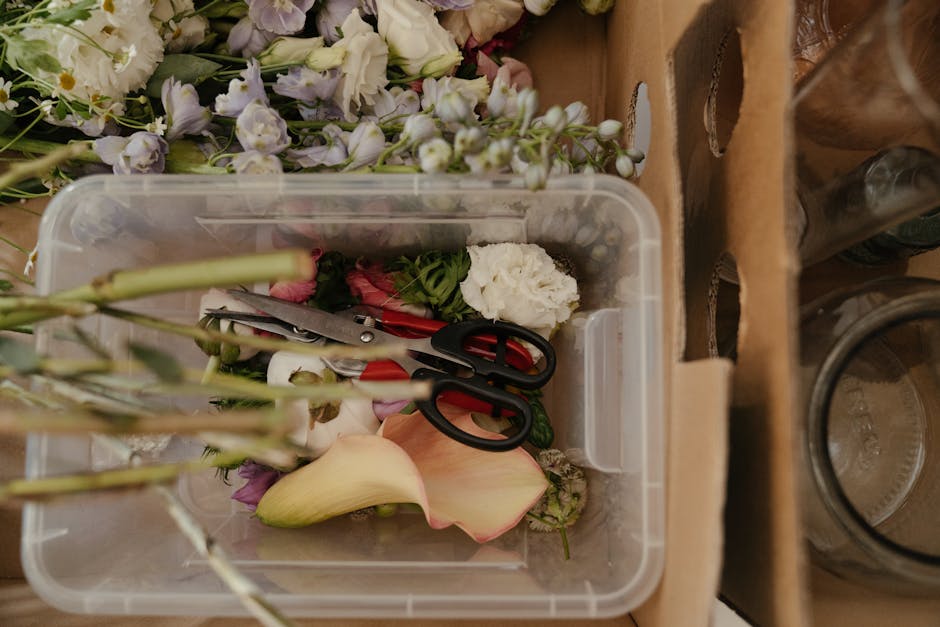
Why Flower waste and disposal rules in the UK what to know Matters
Flower waste might look harmless, but disposal still matters for environmental, operational, and sometimes legal reasons. In the UK, not all waste is treated the same way. A bundle of spent stems is very different from floral foam, cellophane wrap, wire, ribbons, or leftover product from an event. If you put everything together without thinking, you can create avoidable contamination in recycling or organics streams.
This matters most for businesses. Florists, venues, caterers, wedding planners, and event teams often produce a mixed waste stream in a very short time. A Saturday wedding can leave behind buckets of stems, broken corsage pins, candle wax, ribbon, packaging, and food scraps. If those materials are disposed of properly, waste costs and clean-up time usually become easier to manage. If not, the back room turns into a bit of a mess. Not dramatic, just annoying-and expensive in small, repetitive ways.
It also matters to customers and households who want to be more sustainable. Many people assume all flowers can simply go in the general bin. Sometimes that is fine. Sometimes it is not the best option, especially where garden waste collections, composting, or charity reuse are possible. The more you know, the less you throw away unnecessarily.
Key takeaway: flower heads and stems are usually easier to manage than the packaging around them. The smartest disposal choice depends on whether the waste is clean, mixed, contaminated, or commercial.
How Flower waste and disposal rules in the UK what to know Works
At the simplest level, flower waste is treated according to what it is made of. Organic plant material, such as stems, leaves, and blooms, is usually managed differently from plastic wrap, floral foam, pots, tapes, and metal fixings. That split is the whole game, really.
For domestic waste, the local council collection rules tend to guide the practical outcome. Some councils accept garden waste or food-and-garden compostable material in specific bins or collections, while others expect it in general waste unless you have a separate green bin or home compost system. The exact rule depends on the local authority, and that is where people get caught out. One street can have one system and the next street another. British waste sorting, charmingly, can be a bit of a postcode lottery.
For businesses, the picture becomes more structured. Commercial premises usually need to separate waste streams properly, and that includes organic waste where it can be collected separately. If a florist works with large volumes, disposal should be planned rather than improvised. You do not want fresh flowers, cardboard sleeves, plastic ties, and old foam all piled into one bin if it can be avoided.
In practical terms:
- Clean flower matter can often go to garden waste, composting, or general waste depending on local arrangements.
- Mixed floral waste needs sorting first so recyclable or compostable parts are not ruined.
- Non-organic items like ribbons, cellophane, wire, and foam usually need separate handling.
- Heavily contaminated waste may need general waste disposal rather than composting.
If you want to understand how flowers are handled from the point of care right through to disposal, it can help to look at the wider product life cycle too. For example, this website's flower care guidance is useful for reducing waste before flowers reach the bin in the first place. A longer vase life means less disposal, and that is a win in anyone's book.
Key Benefits and Practical Advantages
Doing flower disposal properly gives you a few concrete advantages. Some are obvious, some only show up when you have been through a few busy event weekends and know how the bins fill up by the hour.
- Less contamination: sorted waste is easier to compost, recycle, or collect separately.
- Cleaner workspaces: fewer damp stems and bits of foliage left lying around means less odour and less mess.
- Better compliance: commercial waste is easier to manage when materials are separated clearly.
- Lower waste burden: reducing what goes to general waste can help control disposal volume.
- More sustainable operations: customers increasingly notice when a florist or event supplier takes waste seriously.
There is also a customer-facing benefit. When a florist explains how they manage waste responsibly, it builds trust. People like seeing practical sustainability, not vague green language pasted on a page and left there. A small step, such as separating stems from packaging, often says more than a big claim ever could.
For businesses that deliver flowers regularly, the benefits stretch further. Better disposal practices can support smoother packing, less breakage, and fewer complaints about wilted or badly handled blooms. If you are comparing delivery services, it is worth checking how they handle quality and freshness across the journey. Pages such as delivery information and guarantees can help show how care and reliability link together in real life.
Who This Is For and When It Makes Sense
This topic is relevant to more people than you might think. Yes, florists need it. But so do wedding venues, funeral directors, market traders, hotels, offices, community halls, and households clearing out a bunch of flowers after an event or a difficult day.
It especially makes sense if you are:
- running a flower shop or home-floristry business
- managing event decor for weddings, conferences, or private celebrations
- sorting funeral tributes or sympathy flowers after services
- trying to reduce household waste and compost what you can
- responsible for commercial bins, cleaning schedules, or venue waste plans
For a florist in Hornsey or anywhere with high-footfall delivery volumes, waste management becomes part of operations, not an afterthought. If you sell seasonal bouquets, sympathy flowers, or event arrangements, you will notice disposal needs change with the week. One day it is rose stems and wrap. Another day it is a mountain of foliage, ribbons, and water-soaked paper.
Customers who buy flowers for occasions may also want the least wasteful route. If you are choosing arrangements for a birthday, wedding, or thank-you gift, the ability to enjoy the flowers longer can reduce waste later. A simple browse through options like all flowers or best sellers can help you choose something fresh, suitable, and less likely to be wasted too soon.
Step-by-Step Guidance
Here is a straightforward way to handle flower waste without overcomplicating it.
- Separate the material first. Take the flowers apart from packaging, foam, ribbon, pins, tags, and wrap. Do not skip this. It saves headaches later.
- Check whether the flowers are clean plant waste. If the stems and blooms are free from heavy contamination, they may be suitable for garden waste or composting where accepted.
- Remove non-organic components. Floral foam, plastics, wire, tape, and decorative accessories usually need different disposal routes.
- Check local council rules. Councils differ on what they accept in garden waste or green collections, so use the local guidance rather than guessing.
- For businesses, keep waste streams separate. Use clearly labelled bins or sacks for organic material, packaging, and general waste.
- Store waste properly until collection. Damp flowers can smell quickly, especially in warm rooms. A lidded bin or regular same-day removal helps.
- Review what could be prevented. If a lot of waste is due to poor handling or over-ordering, tweak the process rather than just binning more next time.
A realistic example: if a wedding table arrangement is dismantled at the end of the night, the roses and foliage should not be thrown in with clips and ribbon. Take a couple of extra minutes to sort. It sounds basic, but those couple of minutes often save a lot of mess. And honestly, nobody wants to fish a plastic stem tie out of a compost sack at 9 a.m. on a Monday.
If flowers are still in good condition, consider whether they can be reused for another display, taken home, or repurposed. Some arrangements hold up surprisingly well. In events, that can mean moving blooms from ceremony to reception, or using them the next day for a smaller setting. Simple, but effective.
Expert Tips for Better Results
Over time, the smallest habits make the biggest difference. In our experience, people usually do not struggle with the principle of flower disposal. They struggle with the practical clutter around it.
- Work from the top down: remove visible packaging and fixings before dealing with stems.
- Keep a separate "green waste" container: it saves confusion when the pace picks up.
- Use paper where possible: paper wraps are easier to manage than mixed plastic layers.
- Drain water before disposal: soggy waste is harder to carry and more likely to smell.
- Train staff on the basics: even a short briefing cuts mistakes a lot.
- Review seasonal spikes: Valentine's Day, Mother's Day, wedding season, and Christmas all create different waste patterns.
One small but useful trick is to set up a disposal station near the packing area. Keep scissors, a bin for stems, another for packaging, and a box for reusable items. It sounds a bit fussy until a busy Friday hits and you realise how much calmer everything feels when the sorting is already built in.
Also, do not ignore the influence of product choice. Some flowers last longer than others. Some packaging is less bulky. Some designs are naturally easier to break down after use. If you are looking for arrangements that suit different budgets while still being practical, a category such as cheap flowers or more premium options like luxury flowers can support different needs, but the disposal thinking is broadly the same: choose well, care well, waste less.
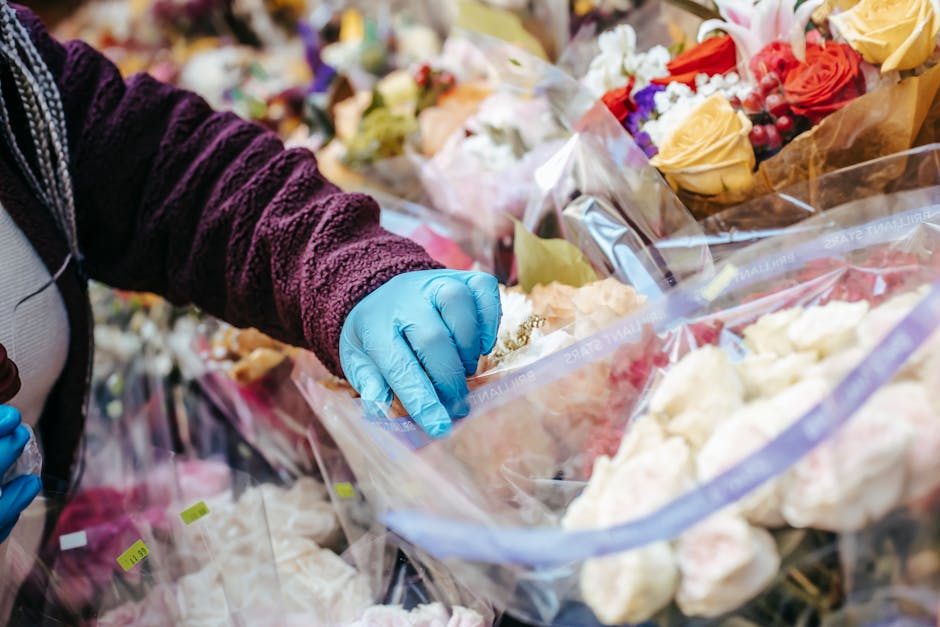
Common Mistakes to Avoid
Most flower waste problems come from a handful of avoidable mistakes. Nothing exotic. Just everyday shortcuts that create bigger issues later.
- Throwing everything into one bin: this is the easiest way to contaminate recyclable or compostable waste.
- Leaving flowers in water too long: once they become slimy and decomposing, disposal becomes smellier and less pleasant.
- Forgetting hidden plastics: tape, wraps, tags, and tie wires are easy to miss.
- Assuming every council accepts the same thing: local rules vary, so what worked elsewhere may not work here.
- Overlooking reused blooms: some flowers can be moved to another display or given away before disposal becomes necessary.
- Storing waste in hot areas: near radiators, sunny windows, or warm kitchens, flower waste breaks down quickly.
There is a subtle but important mistake many people make: they focus only on the flowers and forget the supporting material. In a mixed bouquet, the stems may be the smallest part of the disposal job. It is the wrapping, foam, card inserts, and little bits of fastening that often cause the real issue.
If your business also handles sympathy or funeral work, the tone matters too. You want disposal to be discreet, efficient, and respectful. For those situations, flowers such as funeral flowers and related tribute designs are often handled alongside careful presentation, which means waste sorting should be calm and tidy from the start.
Tools, Resources and Recommendations
You do not need fancy kit to manage flower waste well. A few sensible tools go a long way.
- Labelled bins or sacks: one for plant waste, one for packaging, one for general rubbish.
- Heavy-duty gloves: useful for thorny stems, wet waste, or sharp fixings.
- Secateurs or scissors: for cutting flowers apart cleanly before sorting.
- Compost bin or caddy: if your local arrangements or home setup allow it.
- Simple waste log: helpful for businesses tracking what gets thrown away and why.
From a practical recommendations angle, it is also worth reviewing how you buy and store flowers. Better stock rotation means less waste. Good hydration, cooler storage where appropriate, and avoiding over-ordering all help reduce disposal in the first place. That might sound obvious, but the obvious things are often the ones that save the most money.
For customers who want to support more thoughtful purchasing, the site's sustainability information is a useful place to understand broader practice. Likewise, product pages such as florist choice can be a good way to let the florist design around freshness and seasonality, which often reduces waste compared with forcing a very specific setup.
If you are setting up a workplace or venue system, remember the small stuff: secure lids, easy access, and clear instructions. Waste gets handled better when people are not guessing.
Law, Compliance, Standards, or Best Practice
In the UK, flower waste is not usually treated as a special category on its own. What matters is the type of waste, who is producing it, and whether it is domestic or commercial. That sounds simple, but it is where good compliance starts.
For households, follow your local council's collection rules. For businesses, waste segregation and responsible disposal matter much more. If you are operating commercially, you should be clear about:
- which waste streams are organic
- which are recyclable
- which are general waste
- which items may need special handling because they are contaminated or mixed
Best practice is to keep organic flower waste separate where feasible, especially if it is clean and can be composted or collected separately. Mixed waste is harder to process and more likely to end up as general waste. From a compliance standpoint, that is not ideal, and from an operational standpoint, it can become wasteful pretty fast.
Businesses should also make sure staff understand the difference between floral material and accessories. Foam, some binding materials, and mixed packaging usually are not handled the same way as stems and leaves. If you are ever unsure, it is better to treat the waste conservatively and check the applicable local arrangements rather than assume it all counts as compostable.
One more thing. If flowers are associated with events involving food service, cleaning chemicals, or other contamination, that can change disposal choices. Clean organic waste is one thing. Contaminated waste is another. Keep that distinction in mind and you will avoid most problems.
Options, Methods, or Comparison Table
Different disposal methods suit different situations. Here is a practical comparison to help you choose sensibly.
| Method | Best for | Pros | Watch outs |
|---|---|---|---|
| General waste | Mixed or contaminated flower waste | Simple, widely available | Less sustainable; can be bulky and smelly |
| Garden waste collection | Clean stems, leaves, and blooms where accepted | Often more sustainable; may reduce landfill volume | Local rules vary; no packaging or foam |
| Home composting | Small amounts of clean organic waste | Low cost; useful for gardens | Need the right mix and space; avoid contaminants |
| Reuse or donation | Fresh blooms with life left in them | Reduces waste; extends value | Not all flowers will last long enough |
| Special commercial collection | Busy florists and venues | Efficient, consistent, easier to manage | Needs planning and a suitable provider |
For many households, a local green bin or compost heap is the neatest option. For many businesses, a simple separation system plus regular collections makes more sense. There is no magic answer. The right method is the one that fits the volume, the materials, and the local rules.
Case Study or Real-World Example
Imagine a small wedding venue in North London on a warm Saturday afternoon. The ceremony flowers looked beautiful at 2 p.m., then by 10 p.m. the team had to clear table arrangements, bouquet stems, ribbon, candle packaging, and a handful of broken corsage pins. Not a disaster. Just a typical end-of-night clear-down.
Before the venue tightened its waste routine, everything went into one black sack. It was quick, yes, but the next morning the bag smelled damp, the recycling bin was contaminated, and the clean-up took longer than it should have. After that, the venue made a few changes: one box for reusable decor, one bin for stems and leaves, one sack for packaging, and a quick handover checklist for staff.
The result was not glamorous, but it worked. The clean-up was calmer. The bins were easier to manage. Fewer usable items got thrown away. And, perhaps most importantly, the team stopped wasting time sorting through mixed rubbish at the end of a long day when everyone was already tired.
That is the real point of flower waste rules. They are not there to make life difficult. They are there to stop perfectly manageable waste from becoming a bigger, messier problem than it needs to be.
Practical Checklist
Use this simple checklist before you dispose of flower waste:
- Have I separated stems, leaves, and blooms from packaging?
- Have I removed foam, wire, pins, tape, and plastic ties?
- Is the organic waste clean enough for green waste or composting?
- Do I know my local council's collection rules?
- If this is commercial waste, are the waste streams clearly labelled?
- Can any flowers still be reused, donated, or repurposed?
- Is the waste being stored somewhere cool and contained?
- Are staff or household members clear on what goes where?
- Do I have the right bin liners, sacks, or compost setup?
- Have I checked for hidden contamination before throwing anything out?
If you can tick most of those off, you are already doing better than many busy homes and businesses. That is worth saying plainly.
Get a free quote today and see how much you can save.
Conclusion
Flower waste and disposal rules in the UK are not especially complicated once you break them down. Clean organic material, mixed packaging, and commercial waste all follow different logic. Get those distinctions right, and the job becomes much easier.
The practical win is not only compliance. It is better hygiene, less waste, fewer mistakes, and a more thoughtful approach to how flowers are used from start to finish. Whether you are clearing a vase at home, managing wedding flowers, or running a busy florist operation, a simple sorting routine can save time and reduce frustration.
So, if you are staring at a bin full of tired blooms and wondering where to begin, start small. Separate the stems, remove the packaging, check the local rules, and take it from there. One tidy step at a time. It really does make life easier.
And if you do it well, there is a quiet kind of satisfaction in it. Fresh flowers are lovely. A clean, sensible finish matters too.
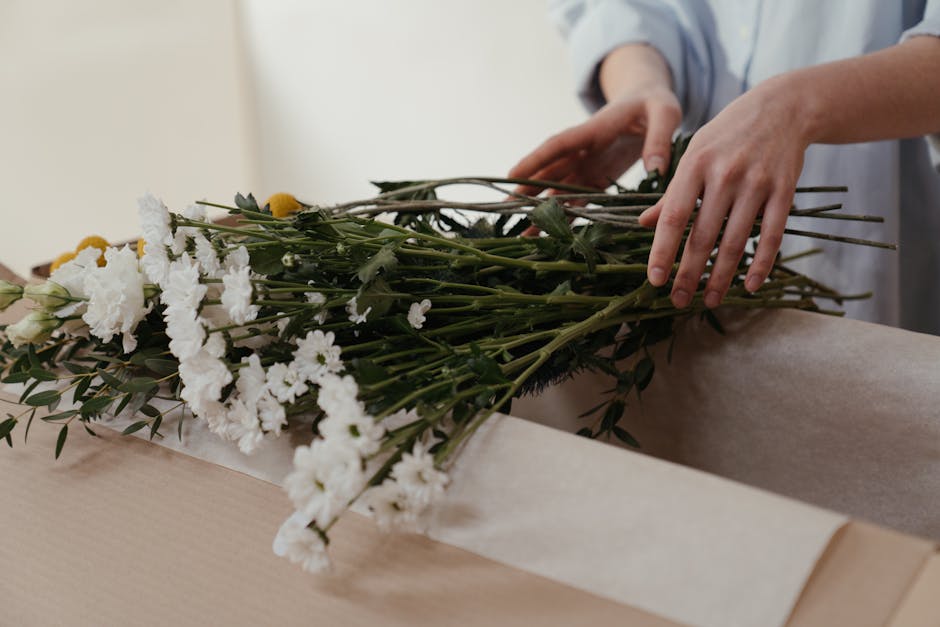
Frequently Asked Questions
Can flower waste go in the normal bin in the UK?
Sometimes, yes. Small amounts of flower waste can usually go in general waste if there is no garden-waste collection or compost option available. But if the material is clean and your local council accepts garden waste, that may be a better choice. Always check local rules first.
Are flowers compostable?
Many flowers, stems, and leaves are compostable if they are clean and free from contaminants such as plastic, wire, foam, or chemical residue. The packaging around the flowers is often the part that stops them from being suitable for composting.
Can florist foam be composted?
No, floral foam is generally not compostable and should not be treated like organic waste. It needs separate disposal. This is one of the most common mix-ups, and it is worth getting right every time.
Do UK councils treat garden waste and flower waste the same way?
Not always. Some councils accept clean flower waste with garden waste, while others have different collection rules or restrictions. Local arrangements vary, so the correct answer depends on where you live or operate.
What should florists do with leftover bouquets?
Florists should first check whether any flowers can be reused, sold at discount, donated, or repurposed for another arrangement. After that, sort organic waste from packaging and dispose of each stream appropriately. Good stock rotation helps here too.
Is it legal to put mixed flower waste into commercial waste?
In many cases, mixed waste will go to general commercial waste if it cannot be separated cleanly. But for best practice and compliance, businesses should separate organic and recyclable material where reasonably possible. That makes the system cleaner and easier to manage.
How do I stop flower waste smelling before collection?
Drain excess water, remove it from warm spaces, and use a lidded bin or sack. Smaller, regular disposals work better than letting wet flowers sit around for days. A cool storage area helps too, especially in summer.
Can funeral flowers be disposed of differently?
Yes, they can be handled in the same practical way as other flowers, but extra care is often taken because of the sensitive context. Clean stems may be separated from non-organic items, and some tributes may be reused or kept longer before disposal. Respect and discretion matter here.
What is the best way to reduce flower waste in the first place?
Buy the right volume, store flowers correctly, keep them hydrated, and choose arrangements that match the occasion and lifespan needed. A little planning reduces waste far more effectively than trying to deal with it later.
Do I need a special bin for flower waste at home?
Not always, but a small caddy or separate compost container can make life easier if you regularly deal with blooms, foliage, or garden trimmings. The main thing is keeping flower waste separate from plastic and other contaminants.
Are dried flowers treated differently from fresh flowers?
They are usually treated according to the same basic principle: check the material and separate any non-organic decorations. Dried flowers are often less messy, but if they contain wire, glue, or plastic accessories, those parts still need separating.
Where should a florist start if they want better flower waste management?
Start with sorting. Create separate containers for green waste, packaging, and general rubbish, then brief staff on what goes where. That simple change solves a surprising number of problems. After that, review your ordering and storage habits so less waste is created in the first place.